
R-6.15: Knowing is Not Enough
Updated
Knowing is Not Enough
Maybe you have heard since childhood that there is an environmental crisis, or perhaps you realized this on your own. Either way, if you have been reading this Primer, you have been exposed to these concepts now. Reading conservation-oriented works like this one is certainly a step in the right direction, but what is needed is for more people to take action.
Historical snapshot: in a 2016 Pew Research Center survey, most U.S. adults reported concern about the environment, while a smaller share said they consistently acted on that concern in daily life.
The chart in the original 2019 Primer reproduced results from “The Politics of Climate,” a Pew Research Center survey conducted May 10–June 6, 2016. The figures are retained here as a dated example of the knowledge-action gap, not as a description of current public opinion.
Most Americans report concern for the environment; one-in-five try to act on that concern all the time.
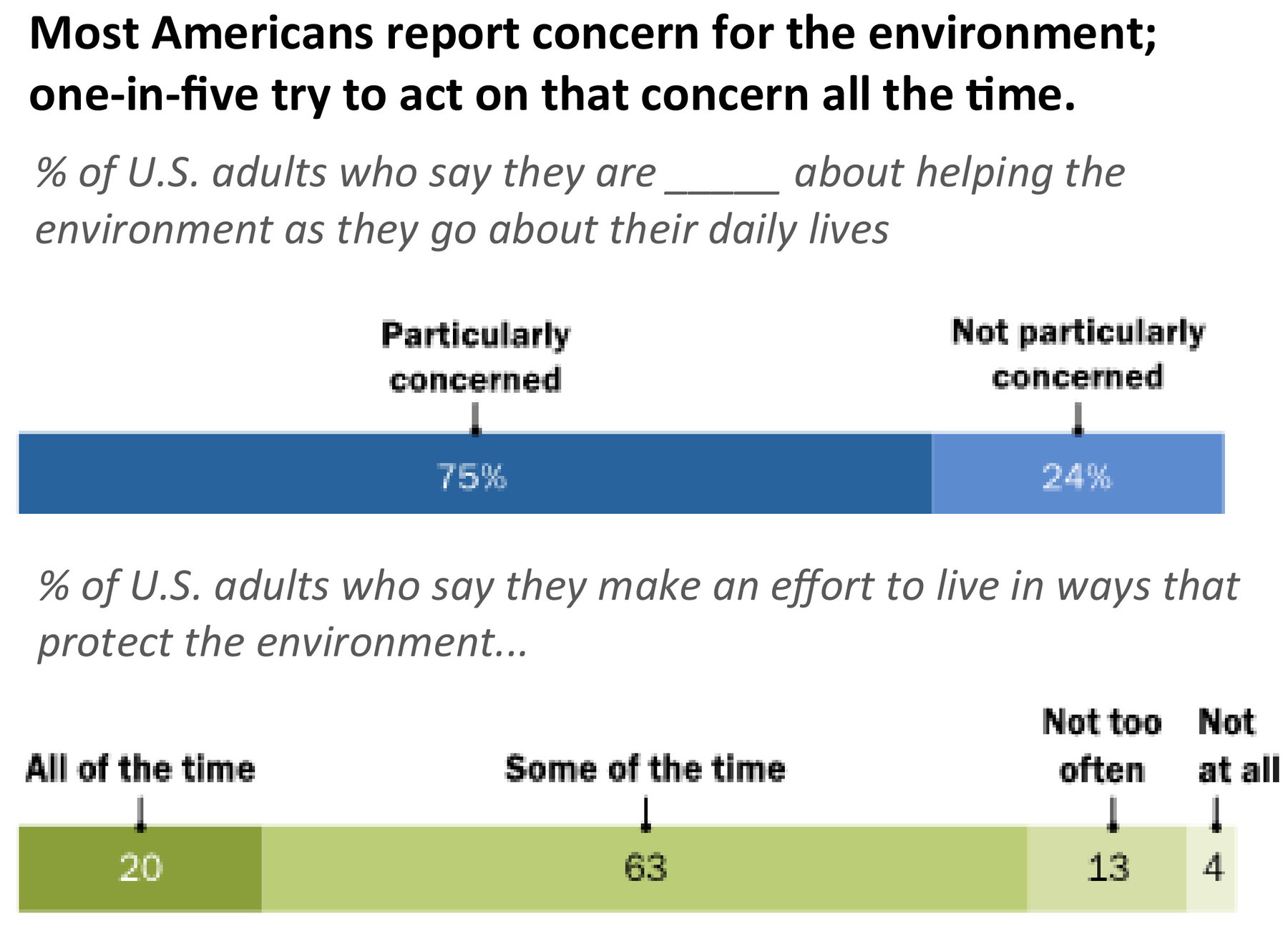
“The Politics of Climate” survey conducted May 10-June 6th, 2016 by the Pew Research Center
A 2016 study by the Pew Research center indicates that, while approximately 3 in 4 Americans consider themselves to be “particularly concerned” with environmental issues, only 1 in 5 claim to make this knowledge a part of their everyday actions. To be fair, 2 out of 3 claimed to act on this knowledge “some of the time.” This probably translates to something along the lines of, “I will recycle some items if my city puts bins out and all I have to do it put it in there.” This stark disjointedness, while likely an inherent part of human nature to some degree, should be cause for self-reflection in each of us. While most of us would probably agree that it sounds silly to watch the environment decline while we pat ourselves on the back for noticing, that is essentially what we seem to be doing.
Similarly, a 2017 study in Biological Conservation compared the environmental footprints of conservationists, economists, and medics across the U.S. and U.K. The conservationists did come out ahead — their combined footprint ran about 16% below the economists’ and 7% below the medics’. But they scored no better than the economists on environmental knowledge, or on knowing which actions actually help. Exposure to environmental information, it seems, does not reliably become environmentally responsible habit. Humans appear to have a propensity for gathering knowledge without acting on it.
This can be understandably demoralizing for those practicing Conservation Through Education, but we should face these facts and learn from them. We need to remember that education is not an end unto itself. How much you know about the environment does not benefit the ecosystem directly. What matters is how much you and your family individually value the environment, and what you commit to doing about it.
It is understandable that we might get overwhelmed and rationalize that, since the world is so big and we are so small, it doesn’t really matter much what we do. The fact is, though, that it does matter. We need to be a part of the forces shaping policy and global trends. We need to be stewards of nature at home. The good news is that people have been making some progress in recent decades regarding how we treat the environment, but the job is far from over.
Hypocrisy may be commonplace, but that is no excuse for us to give up. Knowing that not everyone will act is no reason to stop encouraging them. We cannot expect people to change overnight, but we also cannot give up the fight. The cost of surrender is unthinkable. No matter who or where you are, there is something you can be doing to pitch in. It is what you do that counts.
What are you doing? Could you be doing more?
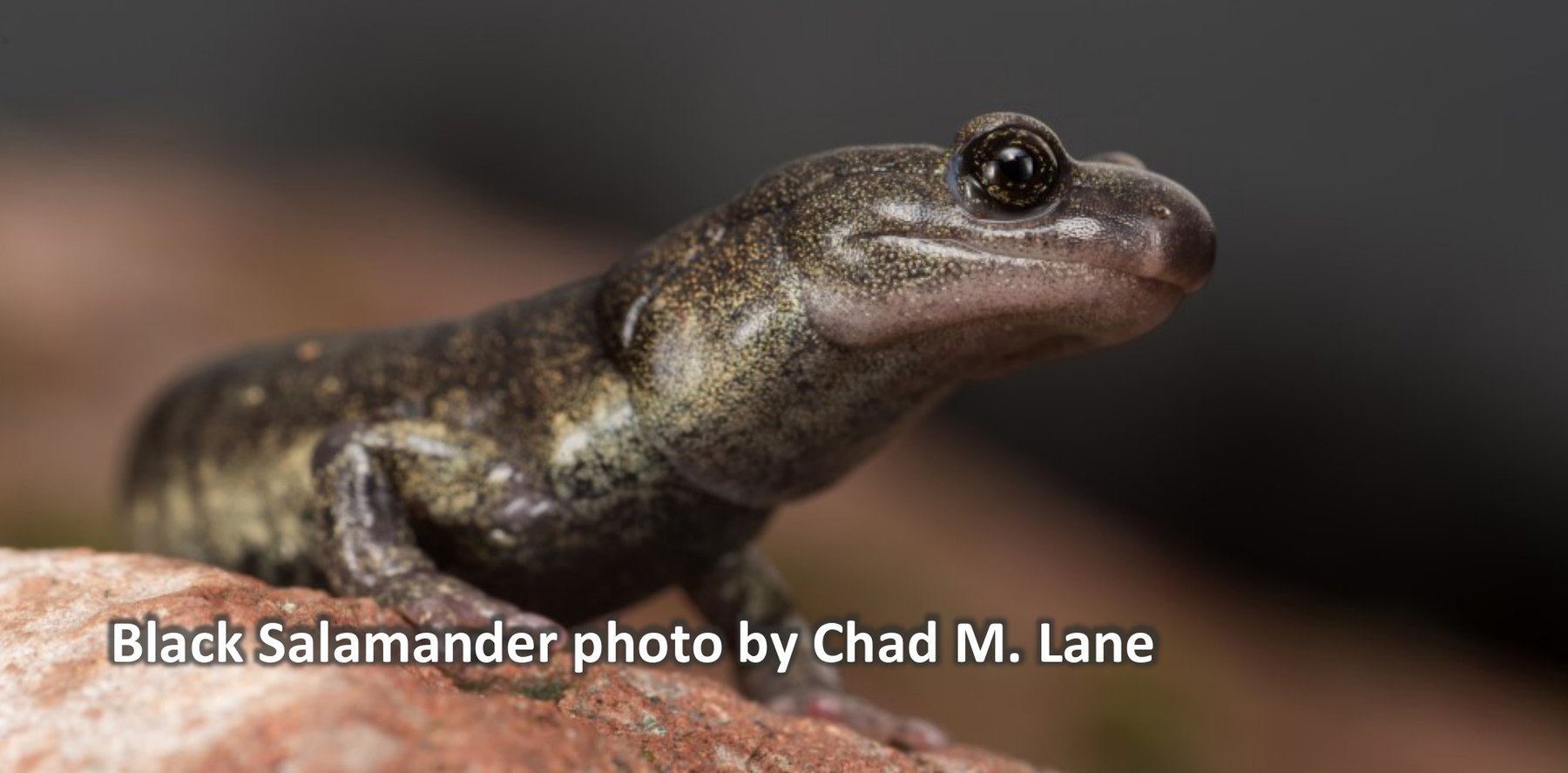
Knowing that we need to act as stewards of the environment is excellent, but it is of little value unless that information shapes our habits. We must do more than know the planet is in crisis— we must act in order for the needed changes to take place.
Sources (3)
- Andrew Balmford, Lizzy Cole, Chris Sandbrook, Brendan Fisher. 2017. The environmental footprints of conservationists, economists and medics compared. Biological Conservation 214:260-269. https://doi.org/10.1016/j.biocon.2017.07.035
- University of Cambridge. 10 October 2017. Conservationists’ eco-footprints suggest education alone won’t change behaviour. https://www.cam.ac.uk/research/news/conservationists-eco-footprints-suggest-education-alone-wont-change-behaviour
- Cary Funk, Brian Kennedy. 4 October 2016. The Politics of Climate. Pew Research Center. https://www.pewresearch.org/internet/2016/10/04/the-politics-of-climate/