About the collective
Raising up stewards of the natural world.
The Herpetology Collective exists to protect and preserve reptile and amphibian biodiversity by helping people understand these animals, care about their future, and participate responsibly in the work surrounding them.
Our mission
Conservation Through Education
THC provides accessible, science-based herpetology education, guidance, and support. Our aim is not merely to transfer facts. It is to help people notice relationships, question familiar myths, make ethical choices, contribute useful observations, and communicate the value of reptiles and amphibians to others.
We want learners to leave with a clearer picture of the living systems around them — and a stronger sense that their choices can matter within those systems.
How we teach
Five commitments behind every course.
They shape what goes into a lesson, how it is written, and what we ask a learner to do with it.
Mental models over triviaIndividual facts become more useful when learners can see how they fit together.
Plain language without lowered standardsScientific rigor and accessibility are not opposites. Clear explanations make rigor easier to reach.
Application over passive completionObservation, research, recordkeeping, conservation participation, and communication help knowledge become behavior.
Structure as a form of accessClear next steps, manageable segments, flexible pacing, and visible progress reduce unnecessary cognitive load.
Inclusivity and accessibilityAt every turn, we ask how herpetology can be made reachable by more people. Accessibility & Inclusivity has more on this.
Where the teaching comes from
It’s all about the critters
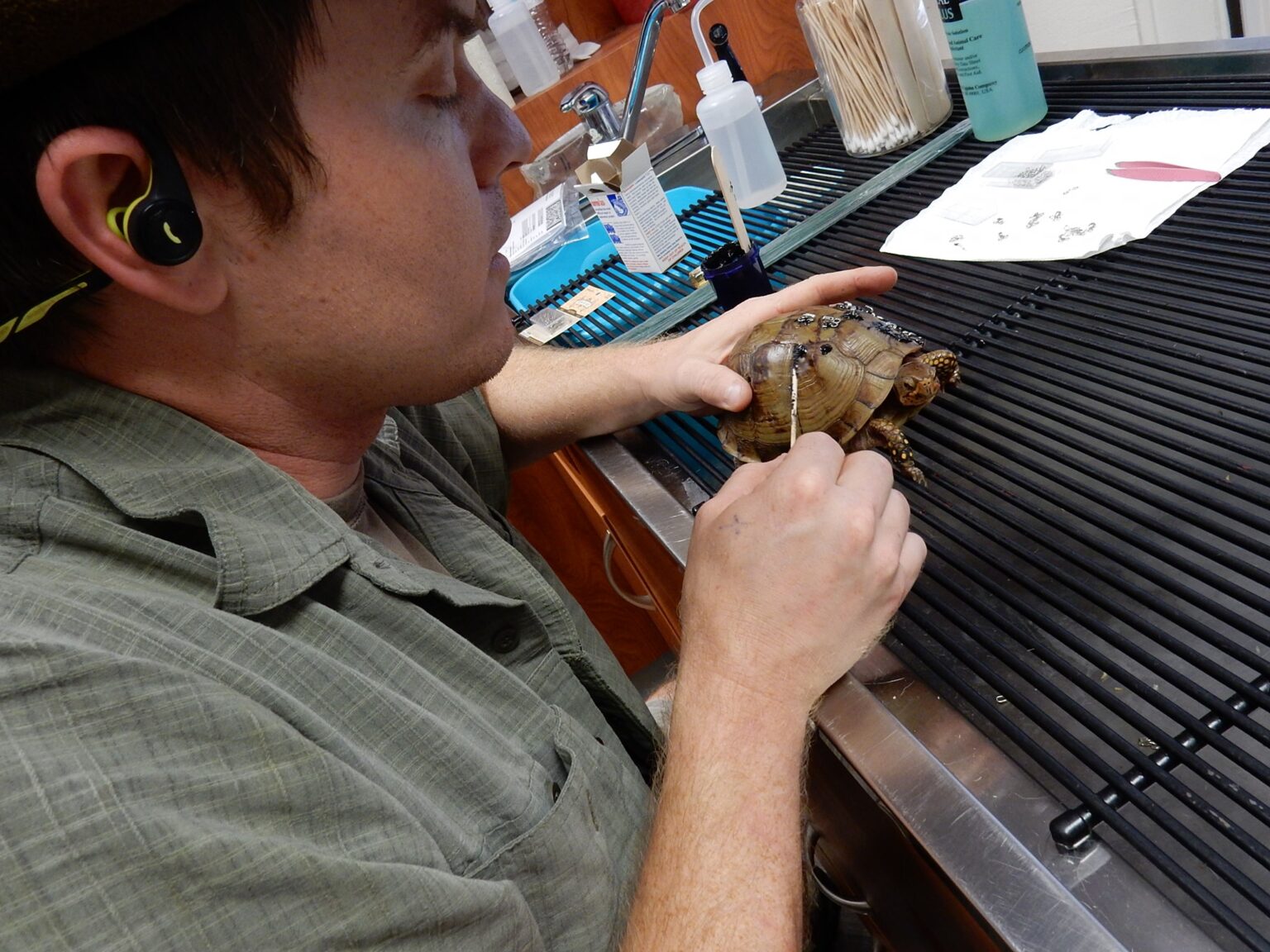
The Herpetology Collective is the educational arm of the Louisiana Exotic Animal Resource Network (LEARN), a rescue, rehabilitation, and sanctuary organization in Louisiana.
LEARN’s tagline has always been “Rescue Locally. Educate Globally.” Years of assisting displaced, injured, surrendered, and misunderstood animals stems from the same love that drives our courses. We can only help so many directly; the hope is that we can help many more by educating others to love them as much as we do.
Machine assistance disclosure
What AI did and did not do here
With AI being such a hot topic these days, a note here may be in order. The course content (the biology, the natural history, the conservation material, and A Primer on Reptiles & Amphibians) was originally written well before generative AI existed as a tool anyone could use. Our courses do not originate as prompts. They come from years of fieldwork, rehabilitation work, direct study, and public education volunteering.
While AI was involved in some technical aspects of constructing the website, it was employed as an accessibility tool. It was used to perform a variety of menial tasks best suited to automation (e.g., fixing broken links, grammatical checks, configuring plugins, flagging dated statistics, surfacing copy tensions, etc.). Here, you may be learning on a machine, but you are not learning from a machine.
Start wherever your curiosity points.
The certification courses, the free snakes course, and the free Primer all come from the same material and the same commitments.