Free textbook
A Primer on Reptiles & Amphibians
A Collection of Educational Nature Bulletins. Our award-winning textbook, and the source of most of the course material. Every page is a stand-alone lesson, which is what makes it readable in short sittings and useful long after you’ve finished the course.
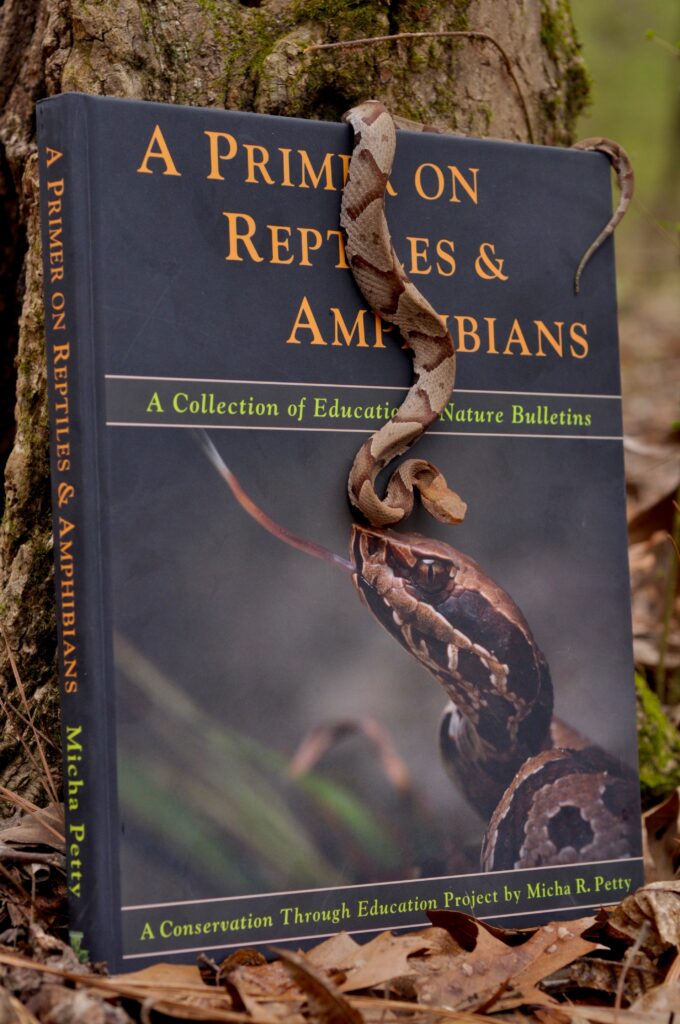
Written and designed by Micha R. Petty, with a foreword by Brian I. Crother, Ph.D., and edited by Joseph C. Mitchell, Ph.D. It was developed with the participation of scientists, veterinarians, wildlife professionals, educators, and photographers.
From the back cover
What the book sets out to do
A Primer on Reptiles & Amphibians is an innovative educational resource designed to forge a connection between the reader and the creeping critters of the world. Turtles, frogs, lizards, salamanders, snakes, and crocodiles… these animals evoke fear and fascination. This primer dispels myths and unlocks mysteries surrounding these diverse survivors which have mastered virtually every habitat on Earth. Tragically, these animals now face pressures of unprecedented severity, but there is still time to make a difference if more of us work together.
Micha Petty is an international award-winning Master Naturalist and wildlife rehabilitator. This critically acclaimed debut volume is a collection of Micha’s interpretive writings, carefully crafted to make learning easy for everyone. These bulletins display his passion for Conservation Through Education while covering topics such as living harmoniously with wildlife, physiology, natural history, observation, and conservation. Flip to any page to be instantly introduced to new facets of reptiles, amphibians, the perils they face, and how you can join the fight to save them!
Permissions, in plain terms
Using this in your own outreach
You can do all of this right now, no permission needed
- Print the whole book, or any single bulletin, and hand it out
- Give copies to a scout troop, a classroom, a library table, a trailhead booth, a neighbor who wants to kill every snake in the yard
- Share the PDF file, post the download link, email it around
- Put unaltered pages into a packet for a program you’re running
- Use it in your own teaching, paid or unpaid, as a resource you hand to people
Just keep the attribution on it, and don’t charge for the material itself.
Write to us first for these, and the answer is usually yes
- Translating a bulletin into another language
- Adapting the reading level for a younger or different audience
- Pulling content into slides, signage, or a handout of your own design
- Anything at a for-profit organization where you’re unsure whether it counts as commercial
Say what you want to do and who it’s for. We’re not looking for a formal proposal.
The one line we hold: don’t sell the material, and don’t build a competing paid course out of it. Everything else is negotiable.
In review
What herpetologists have said
The Primer was reviewed in Herpetological Review, the journal of the Society for the Study of Amphibians and Reptiles, where Jennifer A. Sevin of the University of Richmond concluded that it fills a gap in the herpetological literature.
“I hope it gets, because it deserves, wide attention. It is a must-read for anyone, child or adult, interested in or just curious about herps or nature.”— Dr. Brian Crother, Professor of Biological Sciences, Southeastern Louisiana University
“If I were still teaching herpetology, the Primer would be required reading for all students, both graduates and undergraduates.”— Dr. J. Whitfield “Whit” Gibbons, Professor Emeritus of Ecology, University of Georgia
“I’d be really excited to see this distributed widely because to me it reads as a lot more accessible than most of what’s out there, and that’s really important for reaching new audiences and changing behaviors.”— Dr. Andrew M. Durso, Technical and Scientific Publications Editor, Max Planck Institute for Biogeochemistry
“This is an unusually broad primer on the subject, with very readable, illustrated, page-long essays on nearly every issue imaginable, within the topic. It would make a great gift for that budding herpetologist that every family has, somewhere.”— Dr. Leslie V. Boyer, Professor Emerita of Pathology, University of Arizona; Founding Director, VIPER Institute
“HUGE congratulations to Micha Petty for this wonderful resource in support of amphibian and reptile education and conservation! This book is going to make a difference!”— Dr. Harry W. Greene, Professor Emeritus and Faculty Curator of Herpetology, Cornell University Museum of Vertebrates
“I have had the opportunity to get a sneak peek at this book and it is really fabulous. The author, Micha Petty has done an exceptional job truly creating a primer. I can’t wait to add it to my bookshelf!”— Dr. Lori Neuman-Lee, Assistant Professor of Biological Sciences, Arkansas State University
It also holds a 4.9 average across 43 Amazon ratings (opens in a new tab), and it ranked ninth in its category on Amazon on release. In 2018 the International Herpetological Symposium gave Micha its Joseph Laszlo Memorial Award, largely for the outreach work that produced the book.
In use
What readers have said
One reviewer added it to the required reading list for new interns at The Rattlesnake Conservancy; a veterinarian who works with exotics wrote that they learned something new on almost every page.
“I’ve been working in the field of conservation and wildlife education for ~8 years, and Micha’s volume is one of the best resources I have come across. Whether you’re a veteran herpetologist or have a budding curiosity about our scaly and permeable-skinned friends, this book is a good one to have around.”— Laura Lux
“An excellent effort, to be commended for its up to date, research based take on husbandry and full of other interesting information. Well done Micha Petty and LEARN, this sets new standards for the hobby!”— Advancing Herpetological Husbandry, London, England
“This is an amazing learning tool. I recommend this to anyone seeking foundational knowledge and understanding of reptiles. A tremendous amount of passion and love for reptiles went into it.”— Matthew E. Ruff
“You can preview the entire volume with quality images for free on the PDF version. After you do so, I think most of you will agree a very reasonably priced hardcover is a worthy purchase that goes to good cause.”— Mark Lotterhand, author of In Search of New England’s Pit Vipers
“Micha’s passion for animals warms my heart and has even helped me get over my phobia of snakes! He has devoted his life to protecting critters and teaching people how to do the same.”— Kelsie Marie
“This is a wonderful resource for both professionals and novices. Micha Petty has put a ton of work into this project and it shows.”— Paul-Erik Bakland
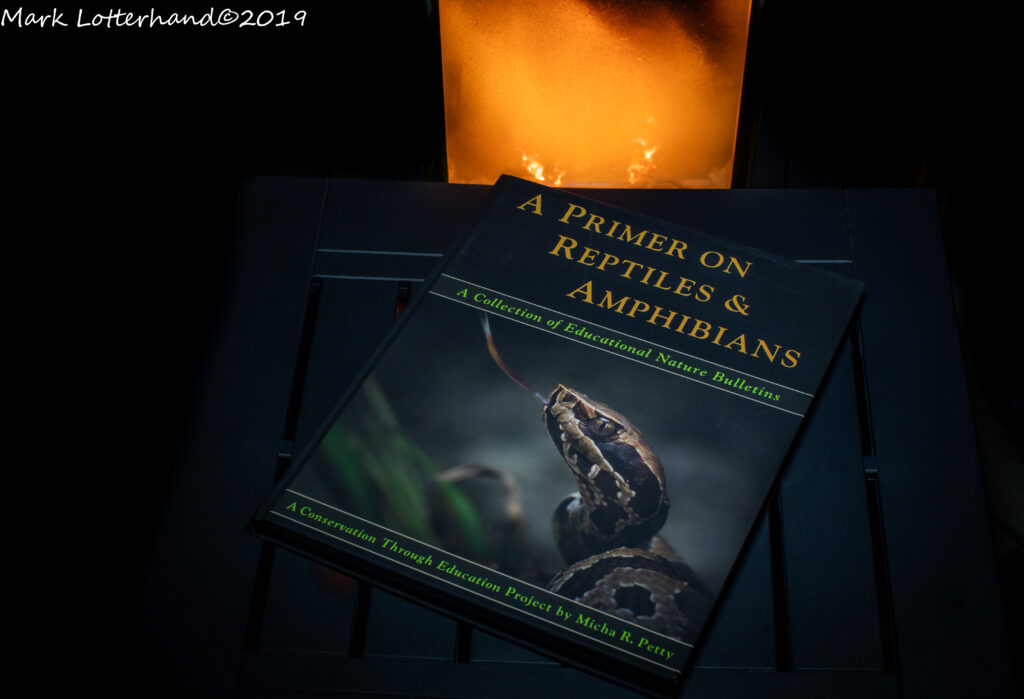
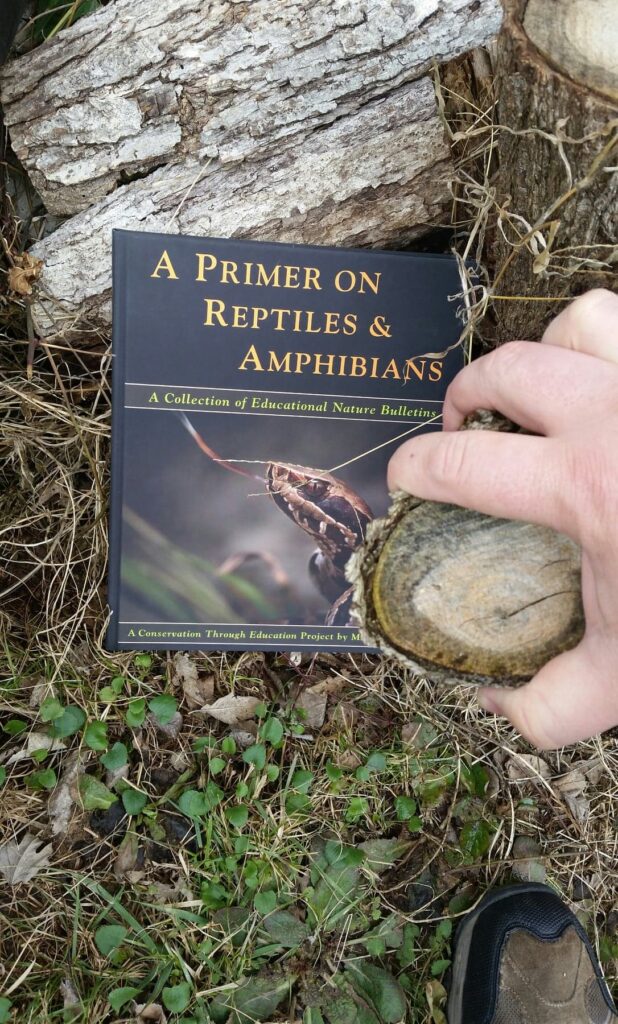
Got a copy? Post your #PrimerSelfies and tag @learnaboutcritters (opens in a new tab) on Facebook. The photographs on this page came from readers.
In the end we will conserve only what we love; we will love only what we understand; and we will understand only what we are taught.
If you want the guided version
The book stands alone. The course puts it in order.
The Primer is the source of most of the course material, and it stands on its own — that is the point of putting it here for free. The Certified Herpetological Guide course puts it in sequence and adds video lessons, knowledge checks, applied field activities, and a certificate of completion. Self-paced, open book, no deadline.