Evidence-led learning
Clear explanations grounded in science, evidence, and careful reasoning.
Conservation Through Education
Become a better steward of the natural world with science-based learning that is understandable, memorable, and useful, without stripping away scientific rigor.
Clear explanations grounded in science, evidence, and careful reasoning.
Flexible pacing, manageable lessons, and meaningful alternative routes.
Ethics, observation, communication, and stewardship are woven throughout.
Flagship course
A serious but approachable, self-paced foundation in reptile and amphibian biology, natural history, conservation, ethical observation, research, recordkeeping, citizen science, and public communication.
In their words
“Connor and I just got to the Oak Mountain State Park interpretive center for our volunteer hours. So excited. Thank you so much for the course we are having a blast with it!”— Erin M.
“This is a fun course. I am enjoying working through it as a complement to my Master’s degree. It’s unrelated, so taking a break from that to learn about herps is fun!”— Martha A.
“I’ve only started on this course but it’s great! And the book is PHENOMENAL. I’ve read it cover to cover, several times. And I thought I was a reptile person before!”— Carrie P.
The rest of the catalog
Every one is self-paced and grounded in science, two of them free. Where a card shows an opening date, you can enroll now and start on that day.
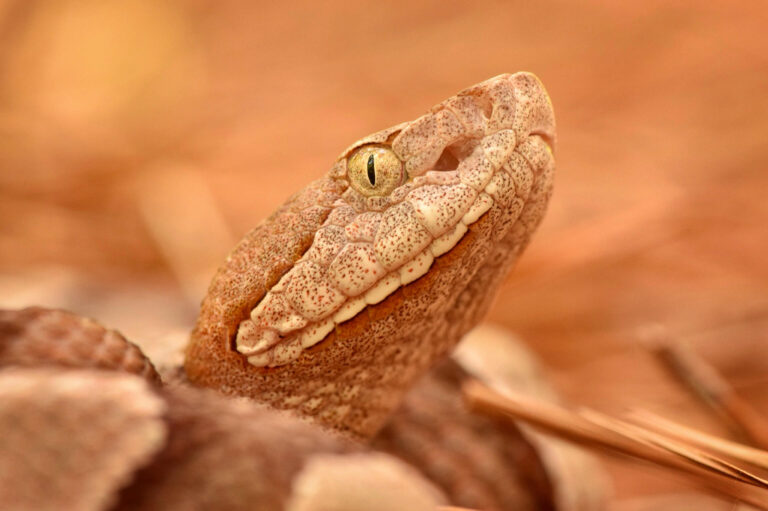
The myths, the biology, why identification rules fail, and what to actually do.
Self-paced · about 5 hours · Free
Start the free course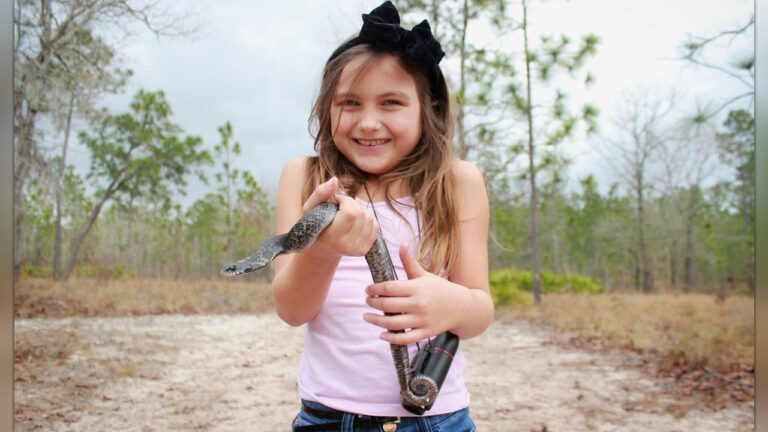
The certification track written at a younger reading level, with adult-partnered fieldwork.
Self-paced · about 30 hours
See the course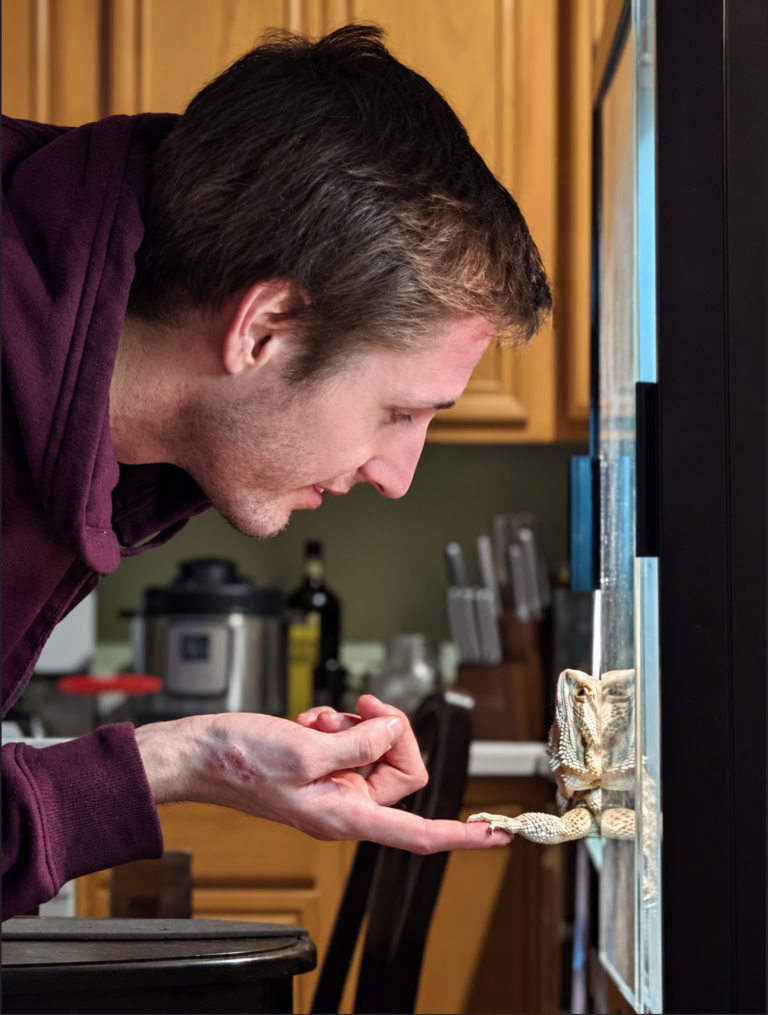
Science-based care for reptiles and amphibians in human care.
Self-paced · about 8 hours
See the course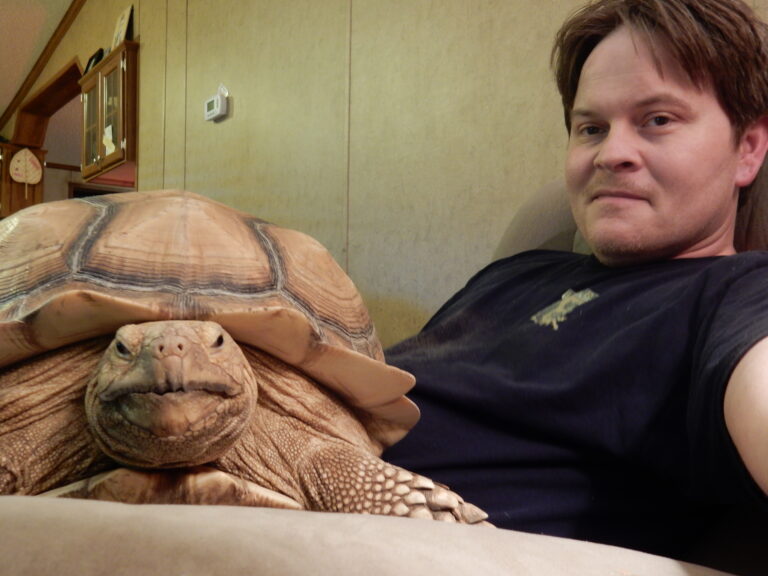
What it takes to run a reptile and amphibian rescue, and whether it is a path you want.
Self-paced · about 6 hours
See the course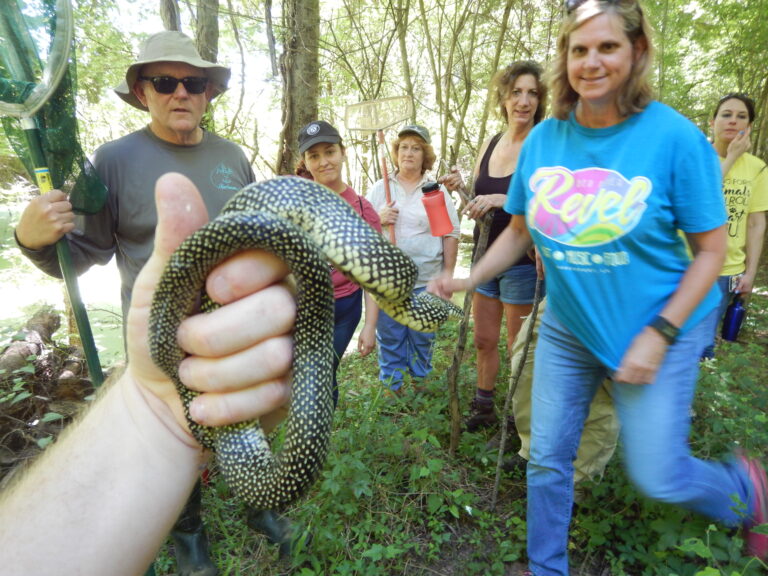
A short course on being a good field companion: respect the site, respect the animals, know the rules, stay safe.
Self-paced · about 2 hours · Free
See the courseFree tools, no sign-up
Find out what lives near you, put a name to something you found, or look up the words and records the experts use. Every tool is free and works on your phone out in the field.
When you use a tool on this site, no AI writes your answer. Results come from rules we set ahead of time, applied to information gathered from sources such as field guides, scientific records and our own courses. They are not made up on the spot. You will see this note on every tool.
AI did help us build the tools: writing code, organizing information and drafting some of the drawings.
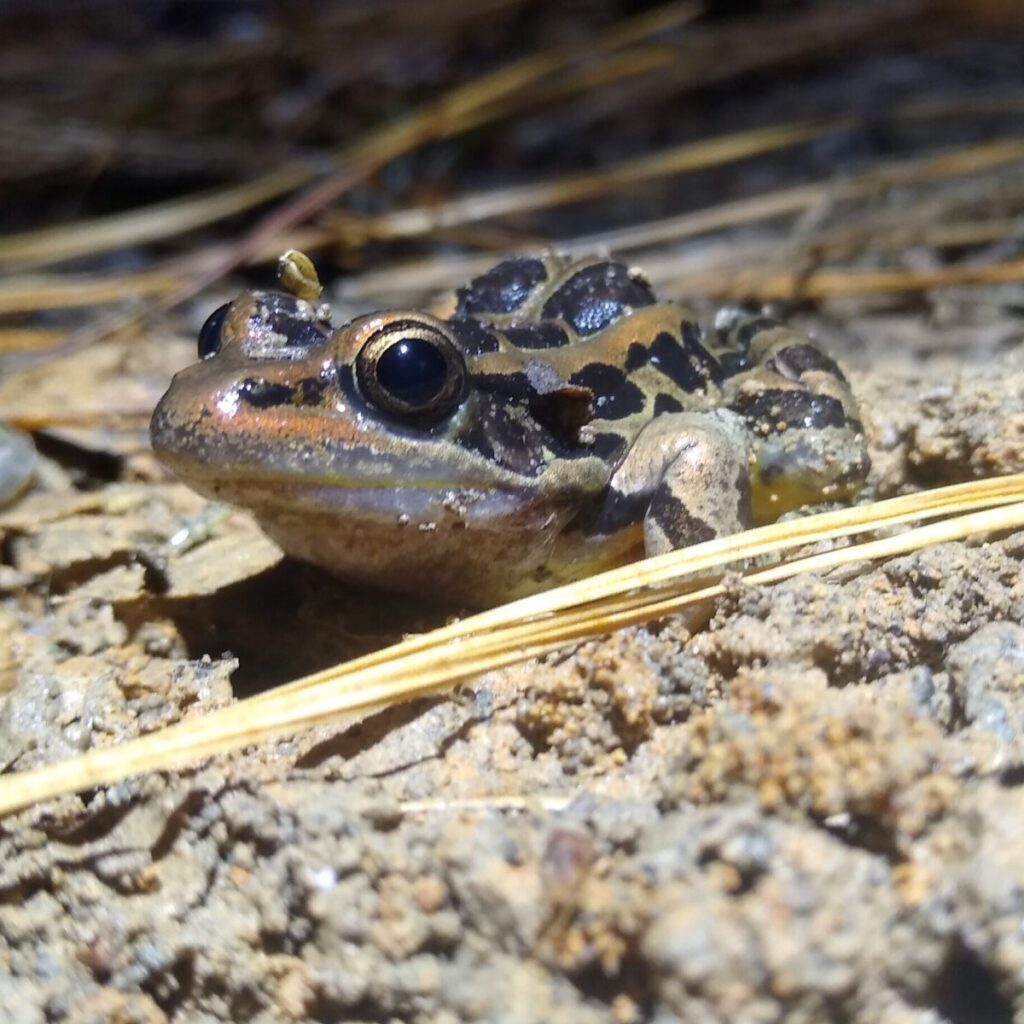
Pickerel Frog. Photo by Micha Petty.
See which reptiles and amphibians are on record where you live, hear the frogs calling this month, make a field guide for your county, plan an easy outing, or check whether animals will be crossing the roads tonight.
Explore the near-you tools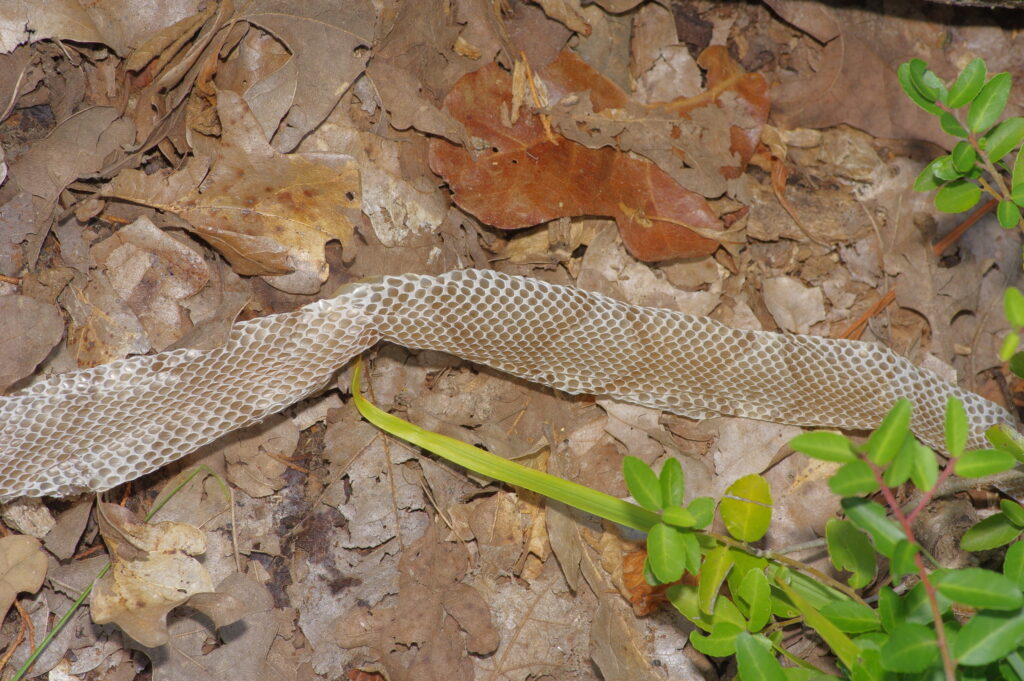
A snake’s shed skin. Photo by Michelle W.
A shed skin, a shell, a clutch of eggs, tadpoles in a ditch, a toad on the porch or a ratsnake in the yard. Answer a few questions about what you can see and the key narrows down the possibilities.
Explore the identification keys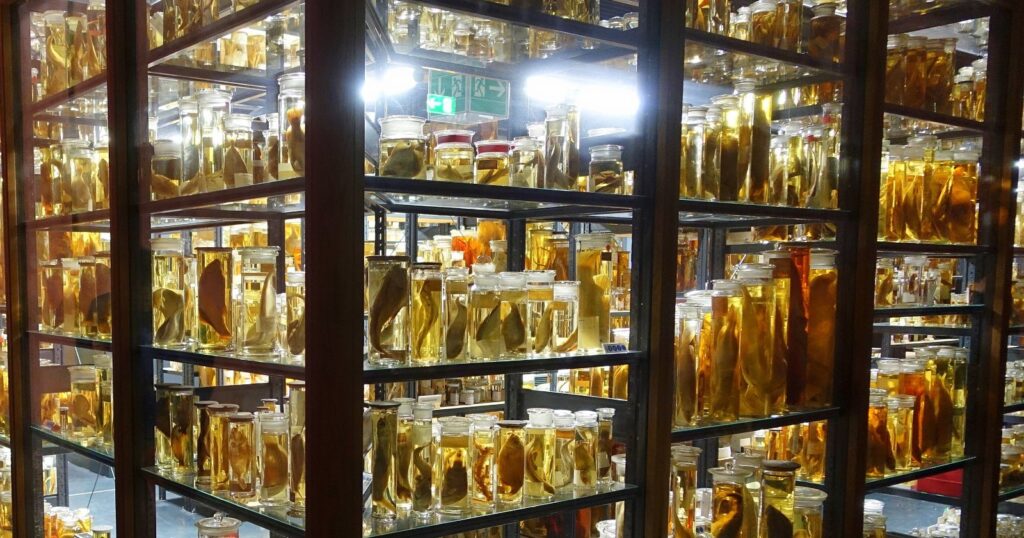
Wet collection, Museum für Naturkunde, Berlin. Photo: Daderot, Wikimedia Commons (CC0).
Search herpetology sources in one place, decode a museum specimen record, hear how a scientific name is said and what it means, learn the scale names field guides use, and pack for a trip.
Explore the learning toolsLearning games
Short games that teach you something true about reptiles and amphibians. Nothing to install and no sign-up; your scores stay on your own device. Share your score and see if your friends can beat it.
Nothing in these games is written by AI while you play. The questions and answers come from sets we built ahead of time from real sources, and each game only picks and shuffles them. You will see this note on every game.
AI did help us build the games: writing code, organizing information and drafting some of the drawings.
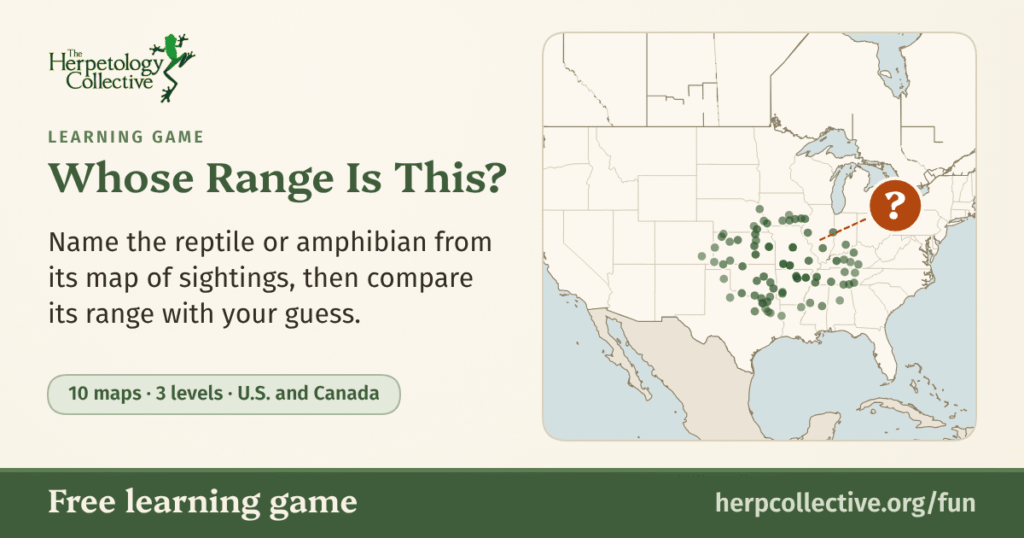
Name a reptile or amphibian from a map of where people have spotted it, then compare its range with your guess.
A map game · 3 levels
Play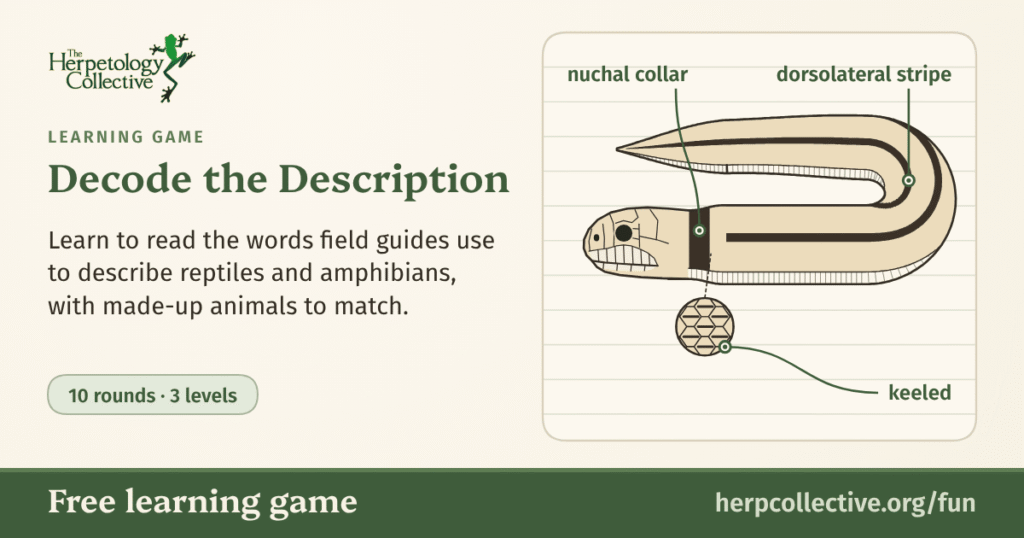
Learn to read the words field guides use to describe reptiles and amphibians, with made-up animals to match.
A word game · 3 levels
Play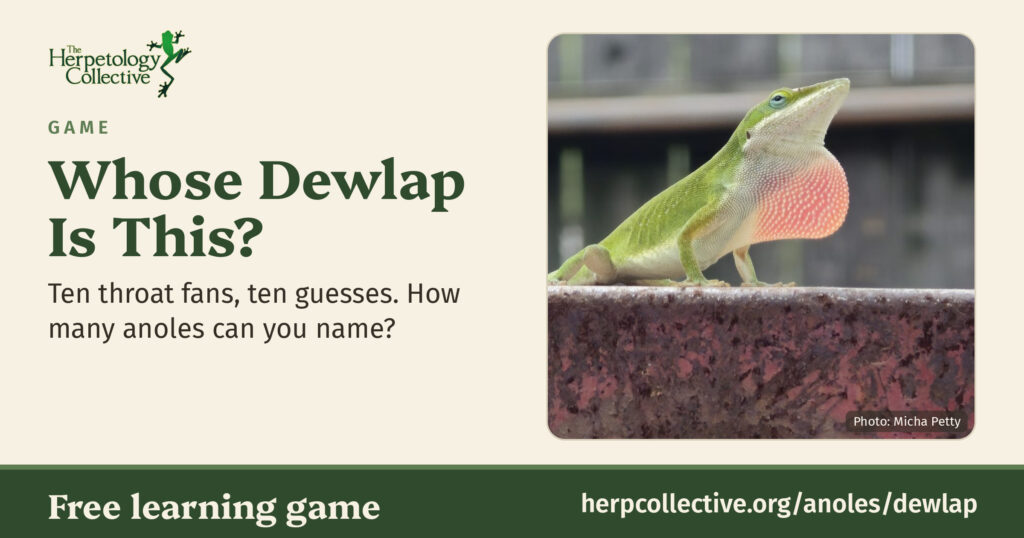
Ten anole throat fans, four choices each. Learn to tell the species apart by dewlap.
A photo game · 10 photos
PlayA larger picture
Reptiles and amphibians are often surrounded by fear, folklore, and oversimplified rules. Better information changes how people respond, observe, contribute, and speak up.
Build useful mental models instead of memorizing disconnected facts.
Connect lessons to animals, habitats, and conservation questions around you.
Practice research, recordkeeping, ethical decisions, and conservation participation.
Replace fear and misinformation with explanations people can actually use.

Free resources and learning tools
You should not have to enroll in a course before reliable, approachable information can help you understand the animals around you.
A richly illustrated, bulletin-based textbook connecting biology, behavior, conservation, field ethics, and everyday wildlife encounters. The digital edition is free.
Read or download the PrimerLonger-form articles about wildlife, conservation, scientific thinking, and the ways people make sense of the living world.
Read The Natural WorldClassroom-style explanations, field observations, and public-facing herpetology and conservation material.
Visit the YouTube channelScientific societies, government agencies, conservation organizations, biodiversity databases, field ethics, and animal-help references.
Explore the resource directoryBuilt to be finishable
If a standard activity creates a barrier because of disability, neurodivergence, chronic illness, location, transportation, safety, technology, or another circumstance, we will do our best to identify an alternative that preserves the learning objective.
Cost is a barrier like any other. Tuition assistance may be available; contact us to discuss your circumstances.
Stay in the loop
Get occasional news about courses, workshops, events, the store, and free resources. You can unsubscribe at any time.