
About Course
This course informs you about the nuts and bolts of herpetology and encourages you to find the confidence to share your passion with others.
These fascinating animals (and the people who are working to preserve them) could really use your help. Whether you take the course to further your professional goals or simply because you enjoy learning, you’re sure to graduate with a deeper understanding of the natural world.
This learning experience built around a simple idea:
People are more likely to protect the natural world when they understand it, value it, and know how to help.
This course is an expansion of the acclaimed textbook, A Primer on Reptiles & Amphibians: A Collection of Educational Nature Bulletins. Visit the Primer’s landing page for more details, including reviews from its readership and the scientific community.
“If I were still teaching herpetology, the Primer would be required reading for all students, both graduates and undergraduates. I am going to recommend to others to do the same.” —Dr. J. Whitfield Gibbons, Professor Emeritus of Ecology, University of Georgia
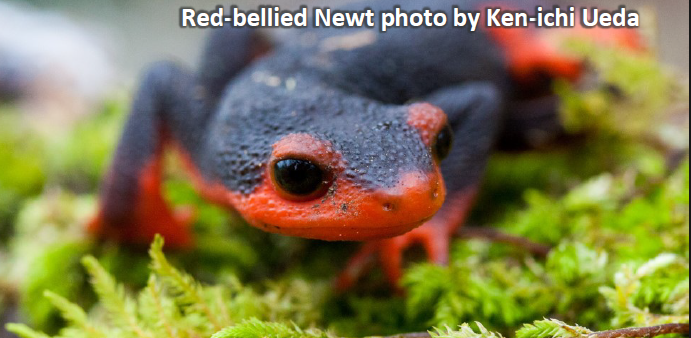
Reptiles and amphibians are among the most fascinating and most frequently misunderstood animals on Earth. Throughout this course, you will build a practical, science-based understanding of these animals while learning how to observe them responsibly, counter harmful misinformation, and contribute to their conservation.
What this program will help you do
By completing this course, you will be better prepared to:
-
Understand foundational reptile and amphibian biology, diversity, and natural history.
-
Separate reliable, evidence-based information from common myths and oversimplified rules.
-
Recognize major conservation concerns affecting reptiles and amphibians.
-
Reduce conflicts between people and wildlife through safe, ethical coexistence.
-
Observe animals responsibly and contribute useful information through citizen science.
-
Communicate the value and conservation needs of these animals in clear, respectful ways.
-
Turn what you learn into practical stewardship in your own community.
Our guiding purpose
The Herpetology Collective exists to protect and preserve reptile and amphibian biodiversity. We seek to increase the public’s commitment to our shared natural heritage by providing accessible, science-based herpetological education, guidance, and support.
This course is not about memorizing disconnected facts or proving how much you already know. It is about developing a useful way of understanding these animals, their relationships with the wider ecosystem, and our responsibilities toward the natural world.
Learn at your own pace
You may work through the course at the pace that suits you. Lessons are divided into short, manageable sections, and you may revisit them whenever needed.
Learners arrive with different backgrounds, abilities, resources, and access to outdoor opportunities. If some portion of the course creates a barrier for you, please reach out so we can work with you toward a reasonable solution.
Drop us a line if you have any questions, and Happy Herping!
“A truly extraordinary and exceptional website and a most remarkable effort to put this amount of herpetological information together. I commend Micha’s thorough dedication to the teaching and welfare of herps.” —Dr. Stan Trauth, Emeritus Professor of Zoology, Arkansas State University; Past President (2012-2013), Herpetologists’ League (in reference to the textbook for this course)
Course Content
Start Here: Course Orientation
Unit I: Introduction to Reptiles & Amphibians
Unit II: Living With Wildlife
Unit III: Classification & Diversity
Unit IV: Biology, Physiology & Reproduction
Unit V: Natural History
Unit VI: Reptile & Amphibian Conservation Concerns
Unit VII: Reptile & Amphibian Observation: Ethics & Techniques
Unit VIII: Scientific Methods
Unit IX: Volunteering & Interpretation
Fieldwork & Applied Learning
Final Exam & Course Completion
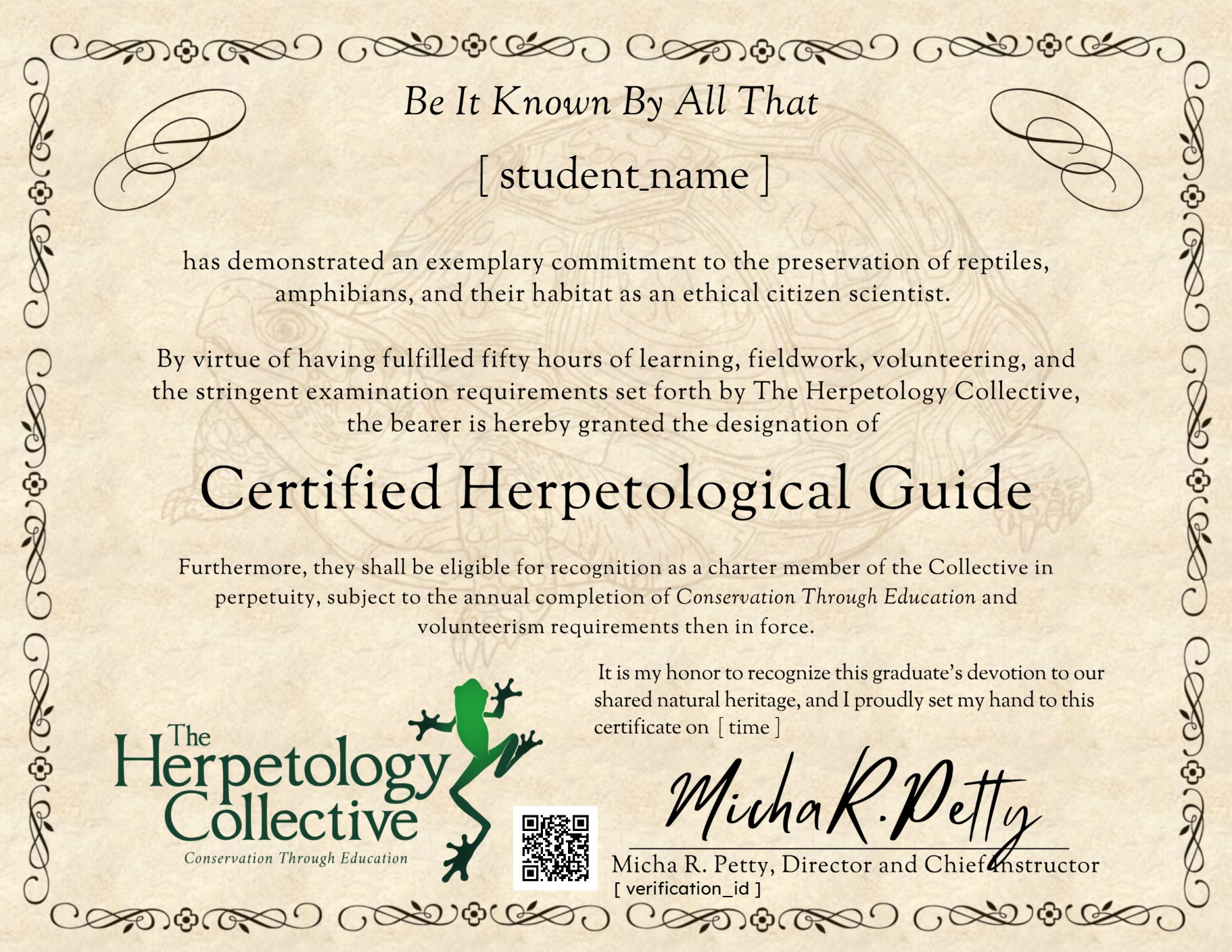
Earn a certificate
Receive an elegant certificate upon completion.
Student Ratings & Reviews

No Review Yet