Course catalog
Six courses, one larger picture.
Every course here is self-paced and grounded in science. Some lead to a certificate, two are free, and all of them aim at the same thing: understanding reptiles and amphibians well enough to live alongside them, care for them, and help other people do the same.
The courses
Choose where to start.
Price, enrollment terms, and the full syllabus live on each course page. Where a card shows an opening date, you can enroll now and start on that day.
Certified Herpetological Guide
For adults
Covers the biology and the conservation, then pushes further: how to talk about these animals with people who are afraid of them.
Self-paced · about 50 hours · $149.00
View Full Details
Coexisting With Wild Snakes
For anyone who shares space with snakes
A free course on living alongside snakes: the myths, the biology, why identification rules fail, and what to actually do.
Self-paced · about 5 hours · Free
View Full Details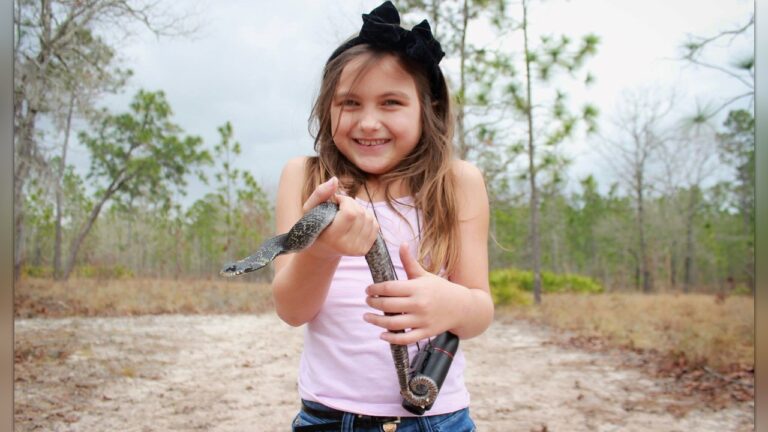
Certified Junior Herpetologist
For teens
The certification track written at a younger reading level, with adult-partnered fieldwork.
Self-paced · about 30 hours · $109.00
View Full Details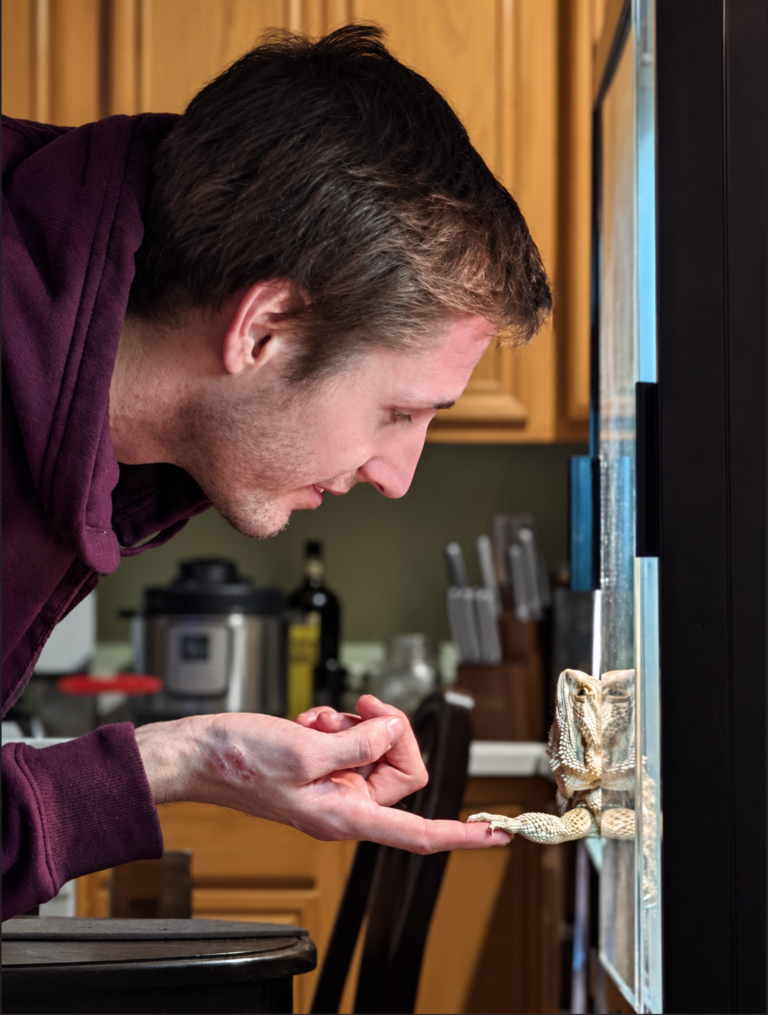
Foundations of Herpetological Husbandry
For people who keep reptiles and amphibians
Science-based care for reptiles and amphibians in human care.
Self-paced · about 8 hours · $49.00
View Full Details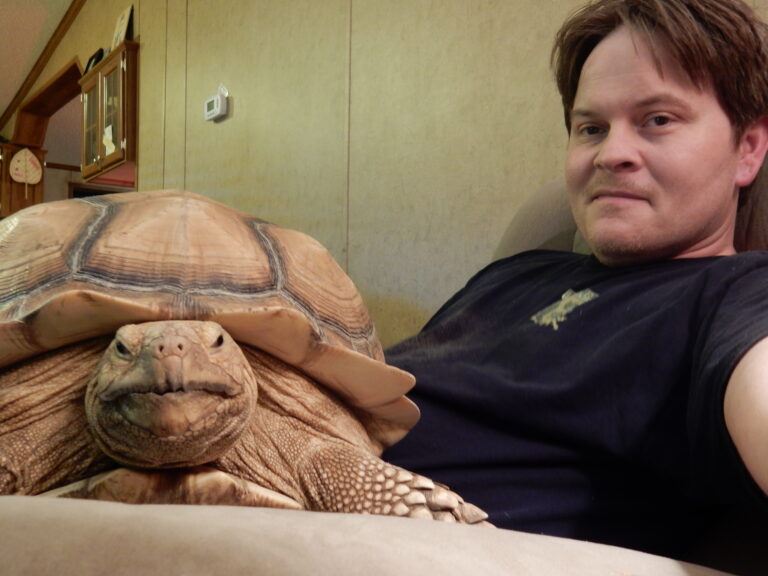
Starting and Running a Reptile & Amphibian Rescue
For people starting or running a rescue
What it takes to run a reptile and amphibian rescue, including whether wildlife rehabilitation is a path you want to pursue.
Self-paced · about 6 hours · $35.00
View Full Details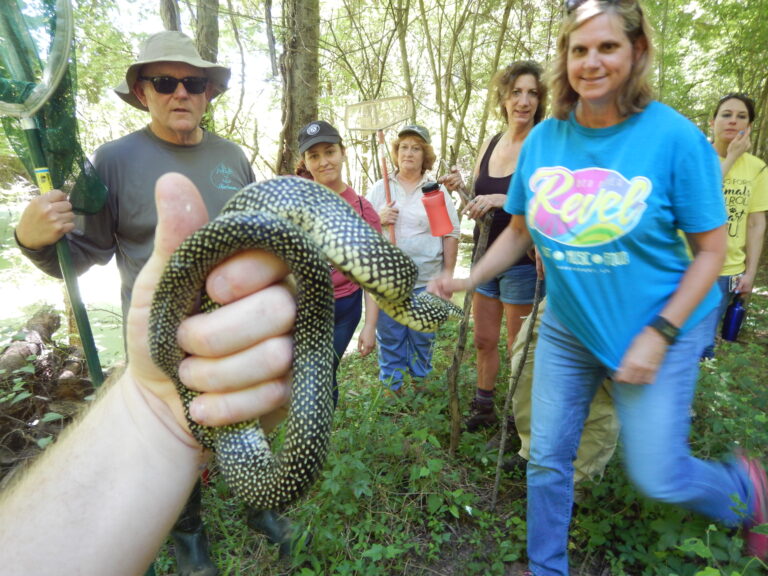
Field Ethics & Practices
For anyone joining a herping or wilderness trip
A short, free course on how to be a good field companion: respect the site, respect the animals, keep locations private, know the rules, and stay safe. Ends with a signable best-practices agreement.
Self-paced · about 2 hours · Free
View Full DetailsThe two certifications
Guide or Junior?
Two programs, same nine units, same material. The difference is reading level and exam.
It does not matter what country you live in. Only a small number of lessons reference US-specific structures, and each of those names the equivalent to look for where you are.
Certified Junior Herpetologist
Written for teens, at a younger reading level than the Guide. If a teen in your life is drawn to reptiles and amphibians, this gives that interest somewhere to go.
Passing score: 85%.
Certified Herpetological Guide
Written for adults. Covers the biology and the conservation, then pushes further: how to talk about these animals with people who are afraid of them.
Whether you take it for professional reasons or because you enjoy learning, you graduate with a deeper understanding of the natural world — and the material to teach it to someone else.
Passing score: 90%.
The nine units
- I. Introduction to Reptiles & Amphibians
- II. Living with Wildlife — Reducing Human-Animal Conflicts
- III. Classification & Diversity
- IV. Biology, Physiology & Reproduction
- V. Natural History
- VI. Reptile & Amphibian Conservation Concerns
- VII. Reptile & Amphibian Observation — Ethics & Techniques
- VIII. Scientific Methods
- IX. Volunteering & Interpretation
In their words
What students have said
Connor and I just got to the Oak Mountain State Park interpretive center for our volunteer hours. So excited. Thank you so much for the course we are having a blast with it!
This is a fun course. I am enjoying working through it as a complement to my Master’s degree. It’s unrelated, so taking a break from that to learn about herps is fun!
I’ve only started on this course but it’s great! And the book is PHENOMENAL. I’ve read it cover to cover, several times. And I thought I was a reptile person before!!!! He has expanded my knowledge tenfold, as well as built on my wide breadth of knowledge and experience. Can’t recommend this enough!
The book behind the course
What people have said about the material
Most of this course is built from A Primer on Reptiles & Amphibians, which has been in independent use and review for several years.
If I were still teaching herpetology, the Primer would be required reading for all students, both graduates and undergraduates.
The Primer was reviewed in Herpetological Review, the journal of the Society for the Study of Amphibians and Reptiles, where Jennifer A. Sevin of the University of Richmond concluded that it fills a gap in the herpetological literature. More of what readers have said is on the Primer page.
The core textbook is free. Read it first if you would rather judge the material than take our word for it. The course is more than the textbook, but it’s worth a read either way.
What the certificate means
Completing a program establishes that you have worked through the lessons, watched the required video content, completed the fieldwork, logged your volunteer hours, and passed an open-book exam on the material. It is a certificate of completion from The Herpetology Collective, and it is a fair thing to put on a resume, a volunteer application, or a wall.
What it is not: it is not an academic degree, a state or federal license, a permit to handle venomous or protected species, a wildlife rehabilitation credential, or a substitute for training your local agency requires. Laws about observing, handling, and collecting herps vary by country, state or province, and sometimes by individual park or preserve. Unit VII teaches you how to find the rules where you live; following them is on you.
Tuition
The price is set low on purpose, so that cost is less likely to be what keeps someone out. It sits well below comparable programs, and that is deliberate rather than a discount. Payment plans are available at checkout, and tuition assistance exists if price is the obstacle.
A few useful things to know
Is the course self-paced?
Yes. There is no single correct pace. The course keeps track of where you left off, so you can work in whatever segments your week allows. You can also skip around in whatever order works best for you.
Is there a deadline?
No. There is no cohort and no expiry. Take two weeks or two years. A course that shows an opening date takes enrollments ahead of that day; once it opens, the same applies.
How does the exam work?
It is open book, with no time limit and unlimited attempts. A failed attempt costs nothing and counts against nothing. It is meant to confirm that you understood the material, not to catch you out.
Do I have to handle animals?
No. Nothing in the course requires catching, touching, or keeping a reptile or amphibian. Field activities are observation-based. Some assignments include published alternatives for access, location, season, mobility, safety, or similar barriers; if the alternative you need is not shown, ask us for an equivalent option.
What if I change my mind?
There is a 14-day refund window, provided you have not worked through more than about a fifth of the course. The details are on the Refund and Returns Policy page.
Can I split the payment up?
We have a credit-based payment plan available at checkout. You may also reach out about payment arrangements and tuition assistance, which are handled case by case through Scholarships and Tuition Assistance.
Who teaches it?
Micha R. Petty — science communicator, Louisiana Master Naturalist, wildlife interpreter, and author of A Primer on Reptiles & Amphibians. The Primer is free, so you can read a great deal of the underlying material before deciding.
Can someone outside the United States participate?
The central biology and conservation material is broadly relevant. Activities involving wildlife rules or local organizations should use the laws, agencies, and resources where the learner lives.
What if a field or testing format is inaccessible?
Ask. Accessibility and Inclusivity explains how, and you do not need a diagnosis or a letter to start the conversation.
Where can I find price and enrollment terms?
On the course page. See current tuition and enroll.
Was AI used to write this course?
No. The core curriculum was written well before AI tools existed for this kind of work, based on years of direct fieldwork and animal care. AI helped build parts of the website around the course, but never the herpetology itself, and never without a person reviewing it first.
Begin building the larger picture.
Herpetology is more than learning animal names; it is learning to see the relationships among animals, habitats, people, evidence, and conservation choices.