Research tool
Museum Records
No AI-generated answers. Built from real sources and fixed rules.What this meansClose
When you use this tool, no AI writes your answer. The result comes from rules we set ahead of time, applied to information gathered from sources such as field guides, scientific records and our own courses. It is not made up on the spot.
AI did help us build it: writing code, organizing information and drafting some of the drawings.
Museums hold millions of preserved reptiles and amphibians, each with a record of where and when it was found. Search those records here, then tap one to see every field explained in plain language. You can also paste a catalog number or the text of a specimen label to have it decoded.
Search the reptile and amphibian specimens that natural history museums have shared online, then tap any record to see what every part of it means: the catalog number, the codes, the dates, the collectors and the place it came from.
Loading…
Why museum records matter
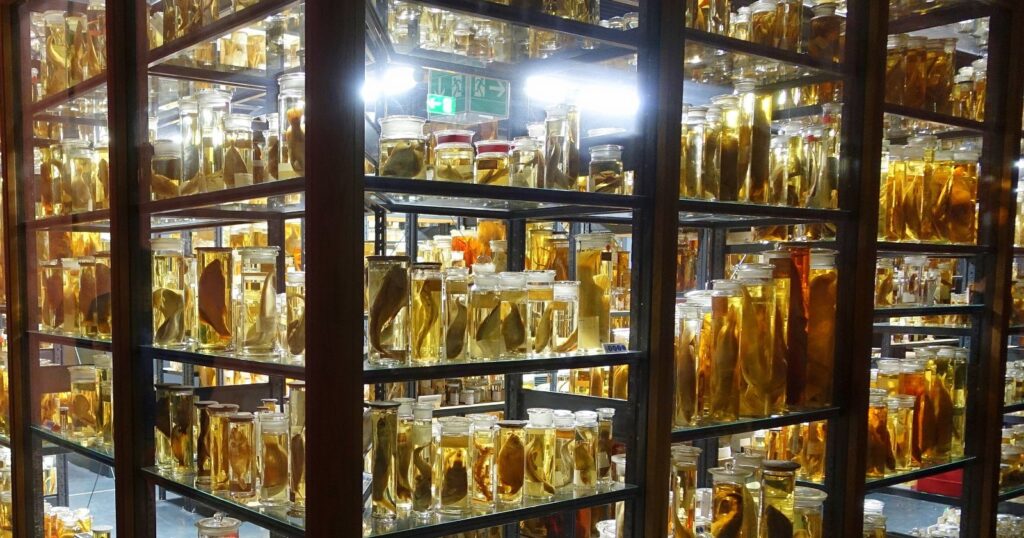
Every jar is a place and a date.
A museum specimen is physical proof that a species was at a certain spot at a certain time. Together, these records are how range maps get drawn, how declines get noticed, and how new species get described. The records are public, but they are written in a shorthand of codes and abbreviations. This tool reads that shorthand for you.
Free, and staying that way
Help keep these tools running
This tool, the free snakes course, the Primer and everything on our Resources page will always be free. If it helped you and you would like to help keep it running (and help us build the next one), you can pitch in. Everything given goes to LEARN, the nonprofit rescue that runs The Herpetology Collective, so it also helps feed, house and care for the animals we take in.