Which skink is this?
Identify a skink.
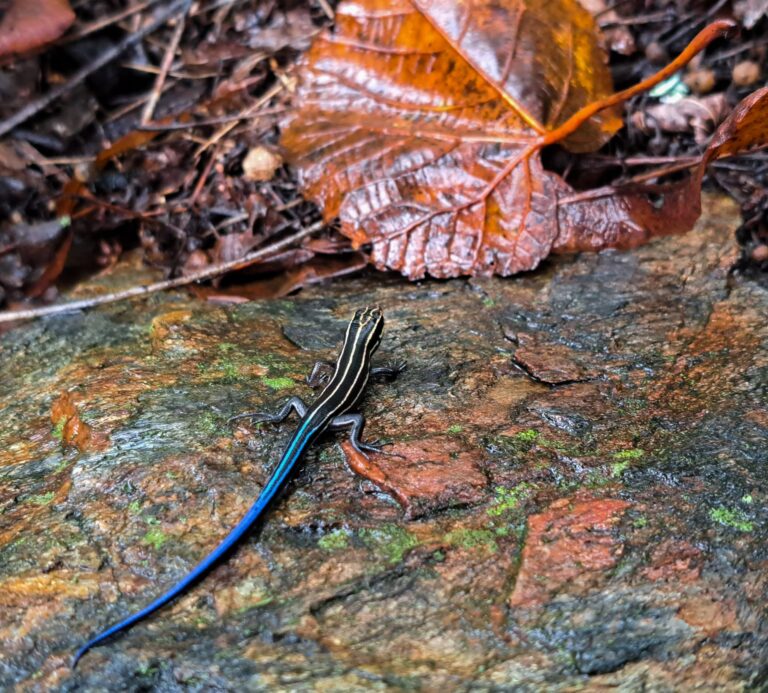
Found a shiny, striped lizard, or a bright blue tail disappearing under a board? Answer a few questions about what you can see (the stripes, the tail, and a few scales on the chin, the lip and under the tail) and this key narrows the possibilities to the skinks that actually live where you found it, showing its reasoning at every step. It also tells you when your lizard is really a racerunner or a legless glass lizard. Skip any question you can’t answer. Free, and in beta.
Loading the key…
How it works
Stripes change with age. Scales don’t.
Young skinks of many species are black with bright stripes and a blue tail, and many fade to plain brown as they grow, so color alone often misleads. A few scale features stay put: the rows of scales under an original (not regrown) tail, the enlarged scales on the chin and behind the corner of the mouth, and, in the Great Plains Skink, scales on the sides that run in slanting rows. Where you found it narrows the rest.
Photos that settle it
A close-up of the chin from below, the side of the head, the underside of the tail near its base, and the whole animal with something for scale. Please don’t grab a skink by the tail: it may break off, and skinks bite hard.
About that blue tail
A bright blue tail usually means a young skink, and several species share it, so a tail alone can’t name the species. A dropped tail keeps wiggling to hold a predator’s attention while the lizard escapes, and the lizard grows a new one.
What the key can’t do
The five-lined skinks of the East are notoriously hard to tell apart, and the features that separate them are small scales best checked in a close-up photo. Treat the result as a short list, and use the “what would separate them” hints to finish the job.
The skink characters were compiled from the Peterson field guides for eastern and western North America, with sources listed on every candidate. The Florida Sand Skink and the Blue-tailed Mole Skink are federally threatened, and other skinks are protected by some states. See every lizard on record for your county on What Lives Near Me.
Go deeper
Turn a name into understanding.
The key tells you which skink you found. The courses teach how those animals live, how to tell them apart, how to care for them, and how to talk about them with people who are afraid of them. Every course is self-paced and grounded in science; one is free, and the rest are priced to stay within reach.
Free
Coexisting With Wild Snakes
For anyone who shares space with snakes
A free course on living alongside snakes: the myths, the biology, why identification rules fail, and what to actually do.
Self-paced · about 5 hours · Free
View Full Details
Open for enrollment
Certified Herpetological Guide
For adults
Covers the biology and the conservation, then pushes further: how to talk about these animals with people who are afraid of them.
Self-paced · about 50 hours · $149.00
View Full Details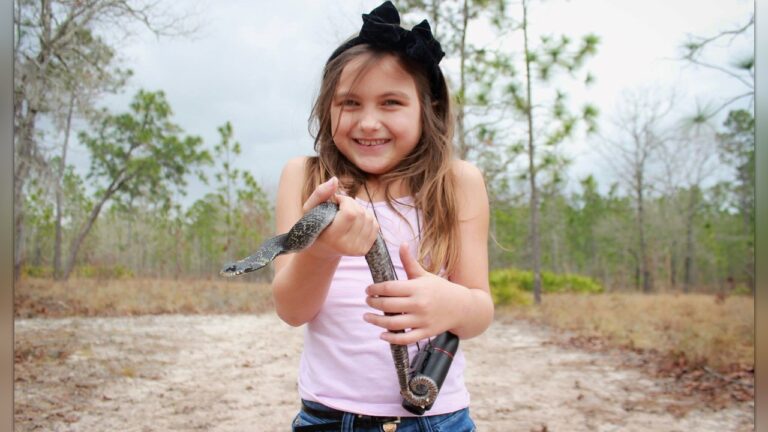
Open for enrollment
Certified Junior Herpetologist
For teens and tweens
The certification track written at a younger reading level, with adult-partnered fieldwork.
Self-paced · about 30 hours · $109.00
View Full Details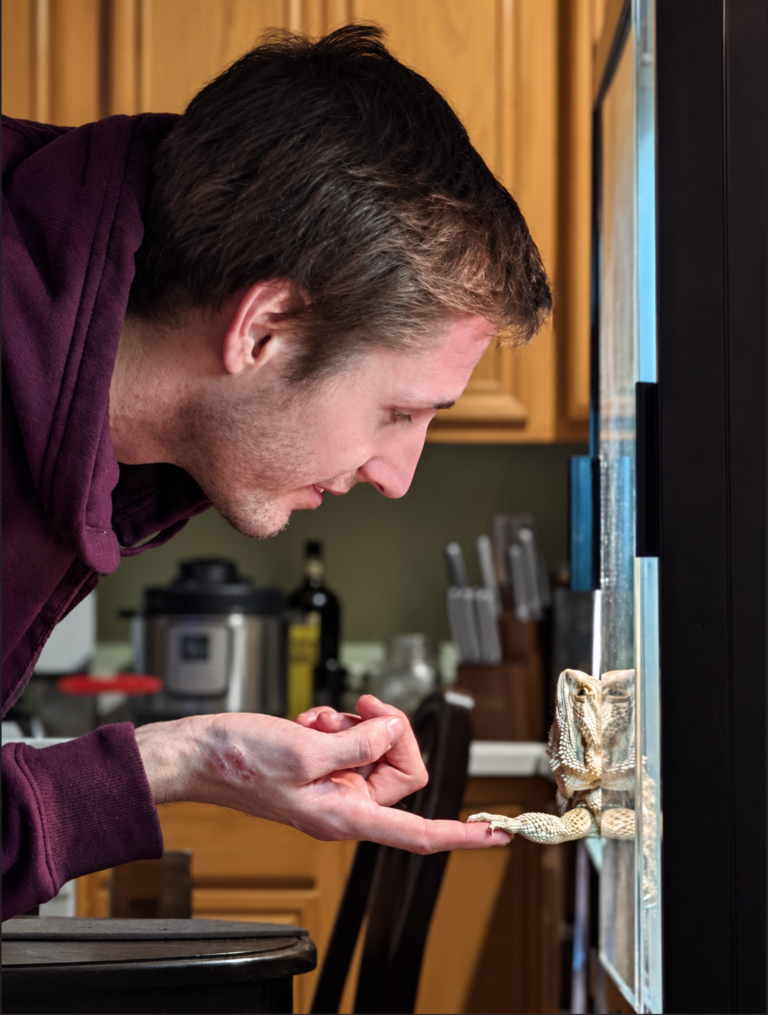
Coming soon
Foundations of Herpetological Husbandry
For people who keep reptiles and amphibians
Science-based care for reptiles and amphibians in human care.
Self-paced · about 8 hours · $49.00
View Full Details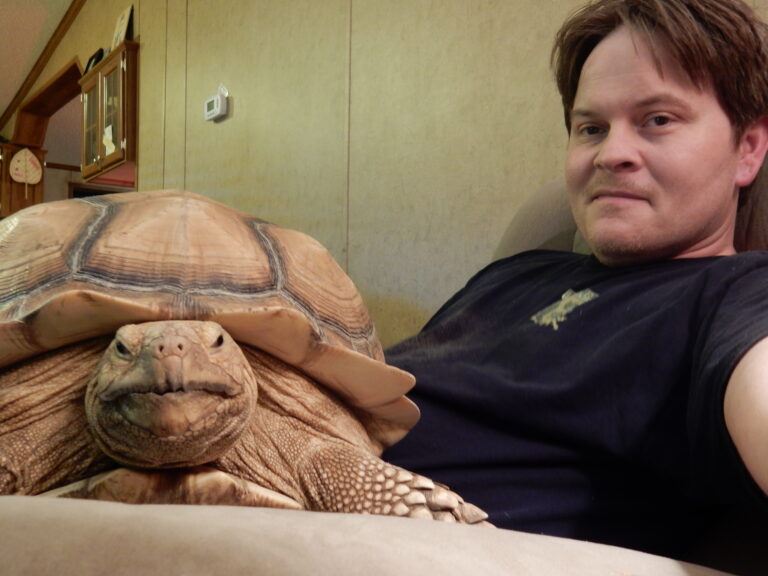
Coming soon
Starting and Running a Reptile & Amphibian Rescue
For people starting or running a rescue
What it takes to run a reptile and amphibian rescue, including whether wildlife rehabilitation is a path you want to pursue.
Self-paced · about 6 hours · $35.00
View Full Details